Biography
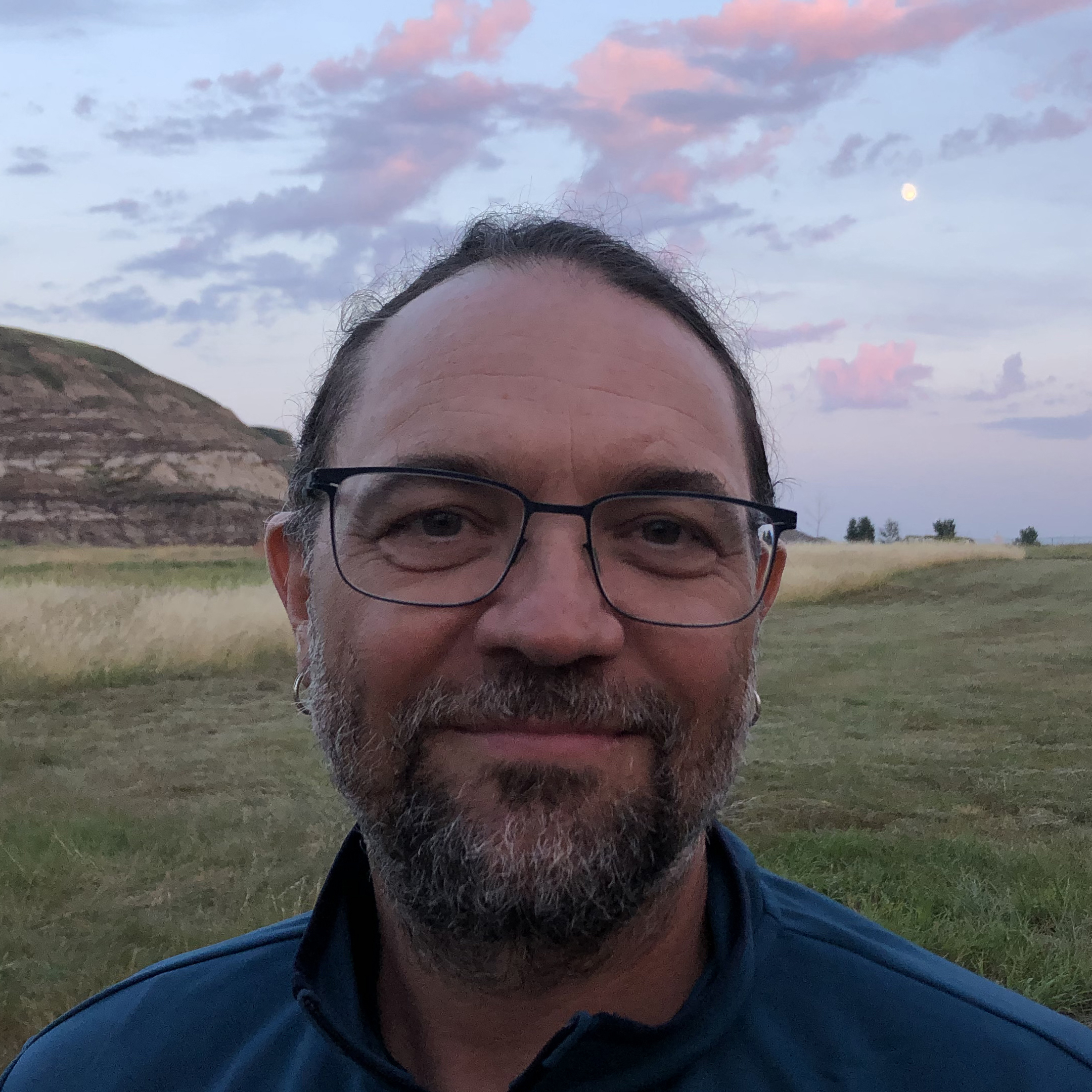
Scott Smallwood is a sound artist, composer and performer who creates works inspired by discovered textures and forms, through a practice of listening, field recording and improvisation. His output ranges from concert works for ensembles and electronics to experimental instruments and software, sound installations and audio games, often made for specific sites and situations. Much of his recent work is concerned with the soundscapes of climate change, and with the dichotomy between ecstatic, luxuriating states of noise and the increasingly precious commodity of natural acoustic environments and quiet spaces.
Born in Dallas, Texas, Smallwood grew up at 10,000 feet in the Colorado Rockies. When he was ten, his father gave him a cassette tape recorder. He still thinks of it as his first instrument, and he has been recording the world ever since: construction sites, birdsong, ice machines, a singing refrigerator. He went on to train as a pianist, percussionist and composer, but the act of recording remains where much of his work begins. Field recordings serve both as raw material and as a way of listening closely to a place.
After studying music at Seattle Pacific University, Miami University and the Peabody Conservatory, Smallwood spent six formative years in Troy, New York. From 1997 to 2003 he worked as a studio engineer, faculty member and technical director in the Integrated Electronic Arts (iEAR) program at Rensselaer Polytechnic Institute. Troy and the surrounding Capital Region were home to an unusually rich and close-knit scene at the time. Free improvisers, electronic musicians, video artists and media experimenters shared stages, studios and ideas, often in makeshift and unconventional spaces. Smallwood was deeply involved in this world of interactive free music, mixing acoustic instruments with live electronics and custom software. He played in groups such as Nyquist, a trio with Joel Taylor (shakuhachi, suling and electronics) and Seth Cluett (electric bass and electronics), in which Smallwood played steel pan and electronics. He also played in 50 Man Machine and Brown Cuts Neighbors, among others, and collaborated frequently with video artists on live audiovisual work.
He then completed a PhD at Princeton University. As a graduate student there, he was one of the co-founders of the Princeton Laptop Orchestra (PLOrk) in 2005, alongside Dan Trueman, Perry Cook and Ge Wang. The ensemble set off a wave of laptop orchestras around the world. Smallwood later stayed on at Princeton as a postdoctoral research associate, and co-wrote some of the field's foundational articles on composing and teaching for laptop orchestra.
As a composer, Smallwood has written for ensembles including the Continuum Ensemble of Toronto, the Nash Ensemble of London and the New York Virtuoso Singers. As a performer, he plays laptops, synthesizers, noise generators, handmade electronic instruments and percussion. He has improvised with Pauline Oliveros, Joe McPhee, John Butcher, Mark Dresser, Cor Fuhler and Todd Reynolds, and collaborated with Matmos and Yanira Castro, among many others. Since 2001 he has performed with Stephan Moore as the duo Evidence. Their structured improvisations unfold through gradual change, sometimes atmospheric and sometimes pulsating, and they have played in experimental venues, clubs, galleries, planetariums and on rooftops. His recordings have been released on Deep Listening, Static Caravan, Wowcool, Simple Logic and Autumn Records, among others. His work has been presented at venues and festivals worldwide including The Stone in New York, the Burning Man festival and the Hong Kong Arts Centre.
A long-running thread in Smallwood's work is what he calls "solarsonics": instruments, devices and installations powered and shaped by sunlight. In these works, passing clouds and the arc of the day become part of the composition. They include Coronium 3500 (Lucie's Halo), a 12-channel solar-powered sound installation commissioned by the Caramoor Center for Music and the Arts for the exhibition In the Garden of Sonic Delights (2014–15), and Hideout, shown in SONAR at the Art Gallery of Alberta. More recently he has turned to audio games, virtual reality (VR) and interactive media. The Way In, for example, is an atmospheric computer game built from recordings made inside a giant water tank. Some of this work has also been shown in the SIGGRAPH 2022 art program, and the 2026 New Interfaces for Musical Expression Conference.
Scott enjoys collaborating, especially across disciplines. His current collaborators include the visual artists Marilène Oliver, Sean Caulfield and Cindy Baker, the choreographer Jen Mesch and the Jen Mesch Dance Conspiracy, and his longtime Evidence partner Stephan Moore.
Smallwood joined the University of Alberta in 2009. He is now a Professor of composition and Chair of the Department of Music, and previously served as director of the university's Sound Studies Institute. He co-directs the Experimental Music Ensemble (XIME), leads the Audio Games Lab, and often runs community workshops in field recording and "sonic photography." He lives in Edmonton, Alberta.